Nizhny Novgorod Province
A Gentleman in MoscowIn Nizhny Novgorod Province, Count Alexander Ilyich Rostov returns to the countryside of his former home and finds that time has altered it almost beyond recognition. The province’s ragged apple trees, long-abandoned road, and mansion reduced to two chimneys give physical form to the distance between remembered home and present reality; the surviving inn offers a modest point of continuity rather than a restoration of what was lost.
Setting and Return
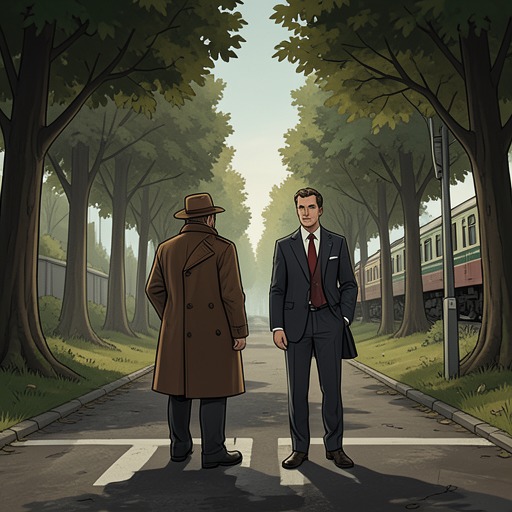
On one of the first afternoons of summer in 1954, a tall traveler in his sixties stands in high grass among ragged apple trees in Nizhny Novgorod Province. A rucksack, dirt on his boots, and the beginnings of a beard suggest a journey of several days, though he shows no weariness. He turns onto a road long since overgrown, smiling wistfully and serenely as he follows a route associated with his past.
A boy drops from an apple tree and asks where the traveler is going. When the traveler asks where the old house is, the boy and a girl offer to lead him there. Their walk along the road takes about ten minutes, making the return a gradual approach rather than a sudden revelation.
The Ruined Home
The mansion has burned to the ground decades earlier. At the end of the overgrown road, its remains are two tilting chimneys at opposite ends of a clearing, with patches of ash still visible. The traveler does not respond with shock, indignation, or despair. Instead, he retains the same wistful, serene smile he wore on turning onto the road.
The scene sets the material fact of loss against the traveler’s composed response. The homecoming does not undo the destruction or recover the world as it was; its significance lies in his ability to encounter the changed place without treating change itself as a reason to reject the return.
The Village and the Limits of Continuity
After wishing the children well, the traveler walks to a nearby village about five miles away. He is not troubled that many old landmarks have disappeared, but is relieved to find that the inn at the edge of town is still standing. He ducks through its front door, removes his rucksack, and asks the innkeeper for a room, first requesting something to eat. She gestures toward the doorway to the tavern.
The contrast between the vanished mansion and the surviving inn gives the province’s homecoming a deliberately modest ending. Continuity is found not in the recovery of a grand family house but in a still-functioning place of shelter and food. The return presents the past as approachable when the traveler expects its surroundings to have changed, while the old road, ruined chimneys, and intact inn mark different degrees of survival within the same landscape.